Every classroom has that one chaotic corner where backpacks go to die. What if that space became the most magical spot in the room instead? These sensory corner ideas for classrooms will transform dead zones into calming, focus-boosting havens kids actually want to use.
1. The Cozy Cave: Build a Canopy Tent Nook
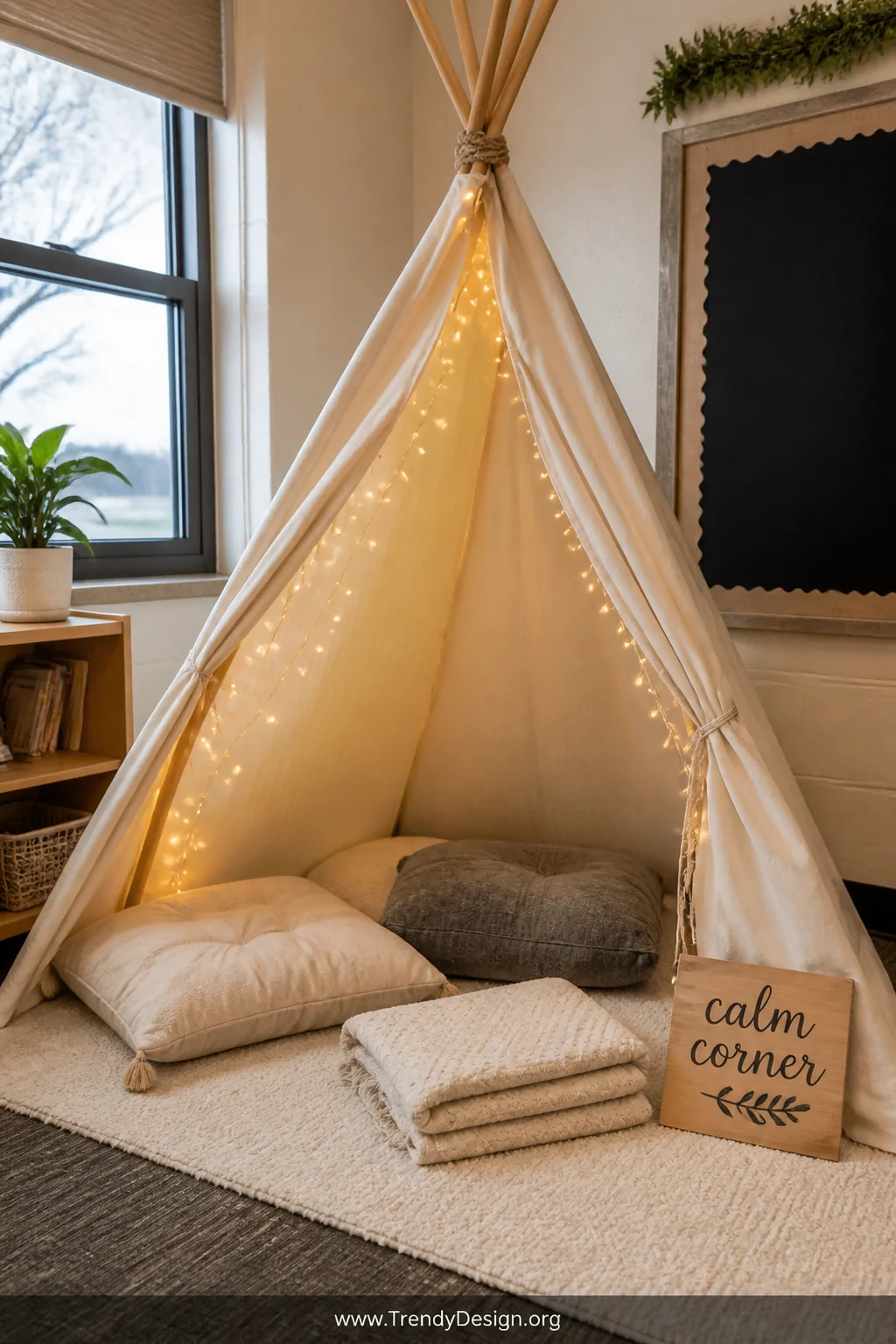
Nothing says “I am calm and focused” like ducking under a soft canopy and feeling the world shrink to a manageable size. A simple teepee tent or pop-up canopy instantly creates a low-stimulation retreat that overwhelmed kids desperately need.
Toss in a couple of floor cushions, a small weighted blanket, and maybe a string of warm fairy lights. You’ve just built a five-star sensory escape on a teacher-budget budget. Honestly, half the adults in the building will want to use it too.
- Use neutral-toned canopies to keep visual stimulation low
- Add a small “calm corner” sign so kids know it’s their safe space
- Keep the interior simple two or three soft items maximum
2. Tactile Wall Panels: Touch Everything (Yes, Really)
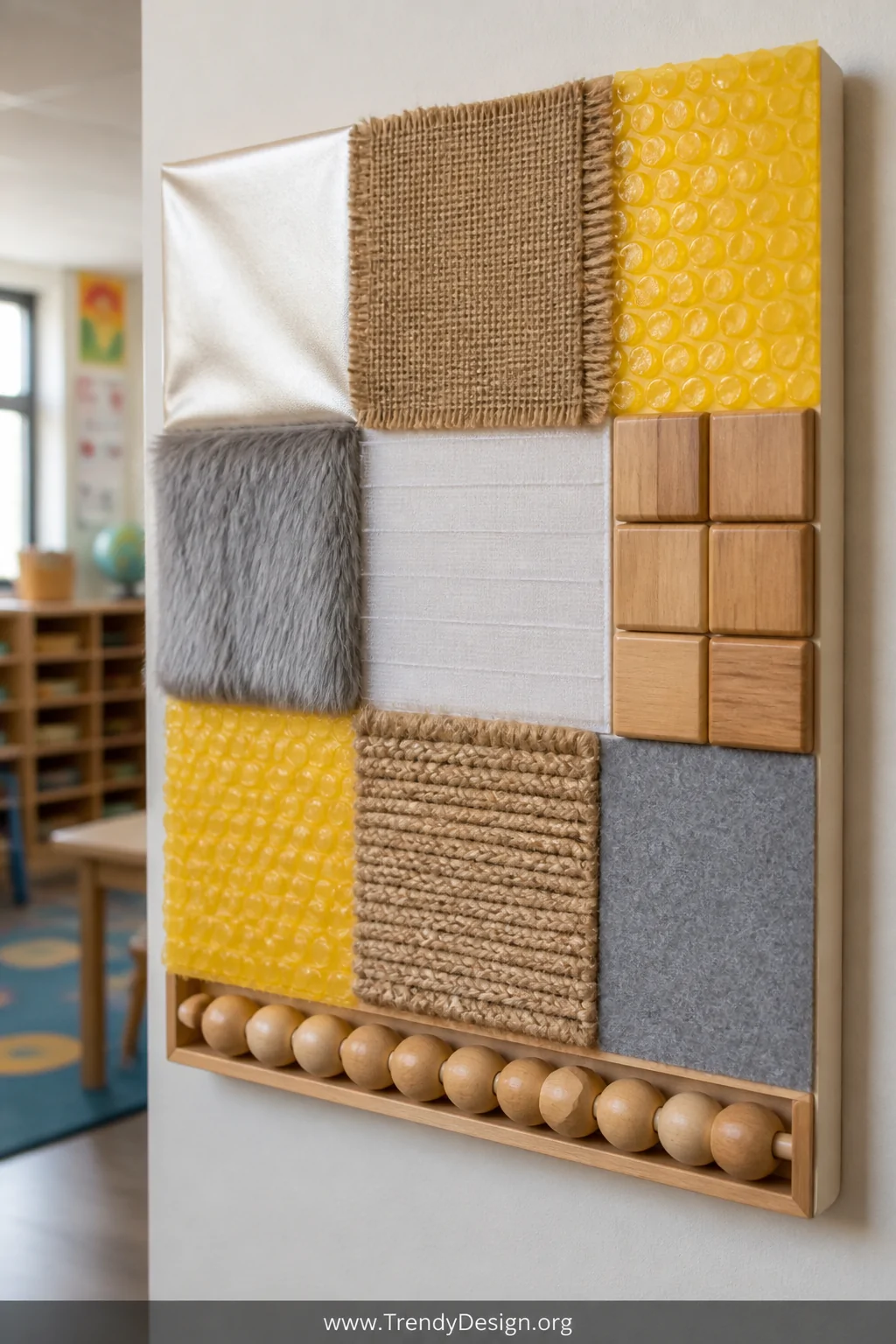
Kids are going to touch things no matter what you say, so you might as well make touching the point. A tactile sensory wall panel gives little hands something purposeful to explore while their brains reset and regulate.
You can DIY these with fabric swatches, bubble wrap strips, velcro patches, fake fur sections, and smooth wooden tiles mounted on a foam board. The variety of textures keeps fingers busy and minds surprisingly quiet. It’s basically fidgeting, but make it educational.
Best Textures to Include
- Smooth satin versus rough burlap for contrast
- Bumpy silicone baking mats repurposed as wall panels
- Velcro strips kids can press and pull apart
- Wooden beads on a rail for a satisfying slide-and-click feel
3. The Sensory Bin Station: Dig, Scoop, and Breathe
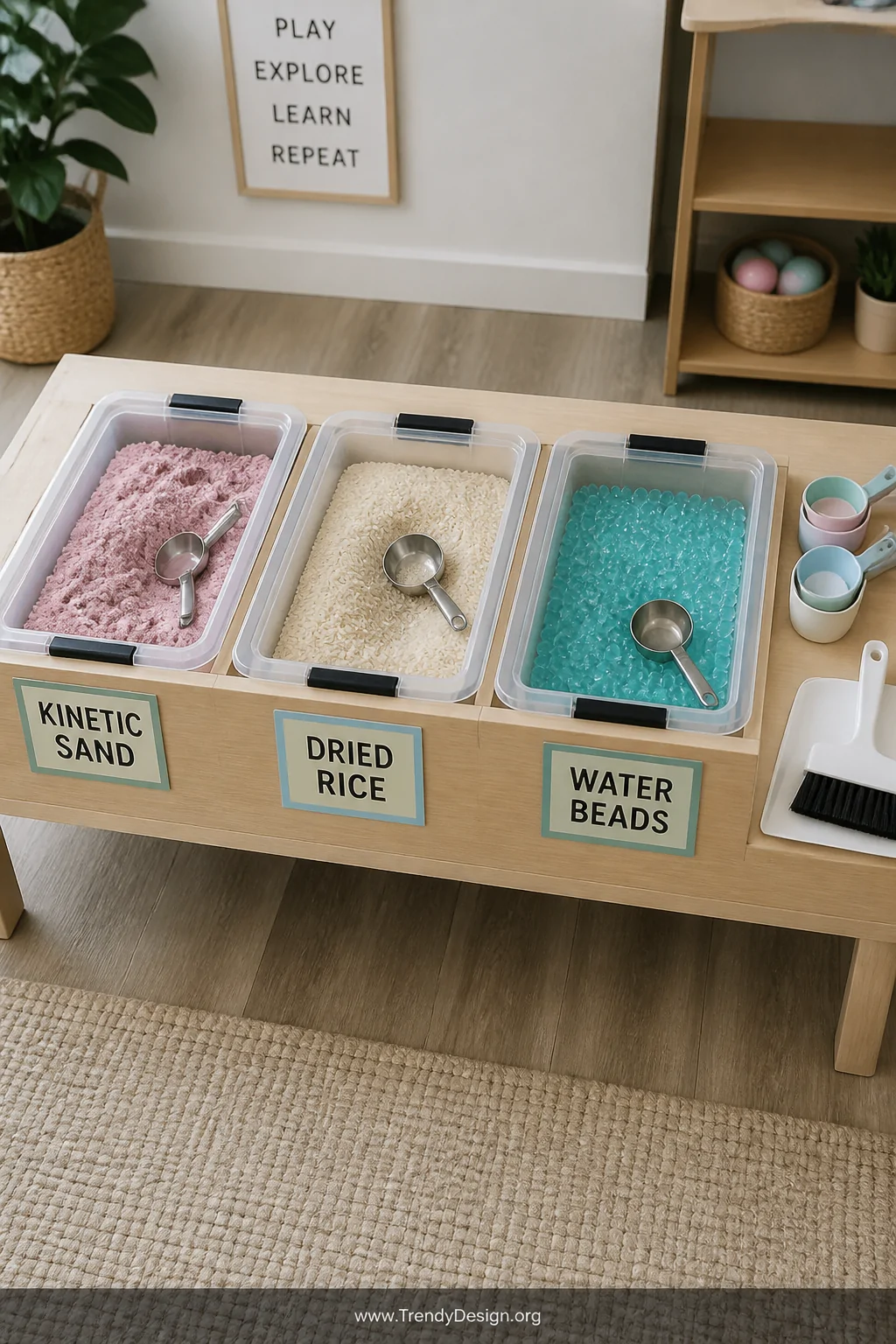
A well-stocked sensory bin station is basically therapy in a plastic tub. Fill shallow containers with kinetic sand, dried rice, or water beads and watch stress physically leave children’s bodies in real time.
Rotate the fillings seasonally to keep things fresh and exciting. Add small scoops, measuring cups, and hidden objects for extra engagement. FYI, this station will also become your most effective “five-minute cool-down” tool for students having a rough day.
- Label each bin clearly so students self-select appropriately
- Keep a small dustpan nearby things will spill, and that’s okay
- Use bins with lids so textures stay fresh between uses
4. Visual Calm Displays: Eye Candy That Actually Soothes
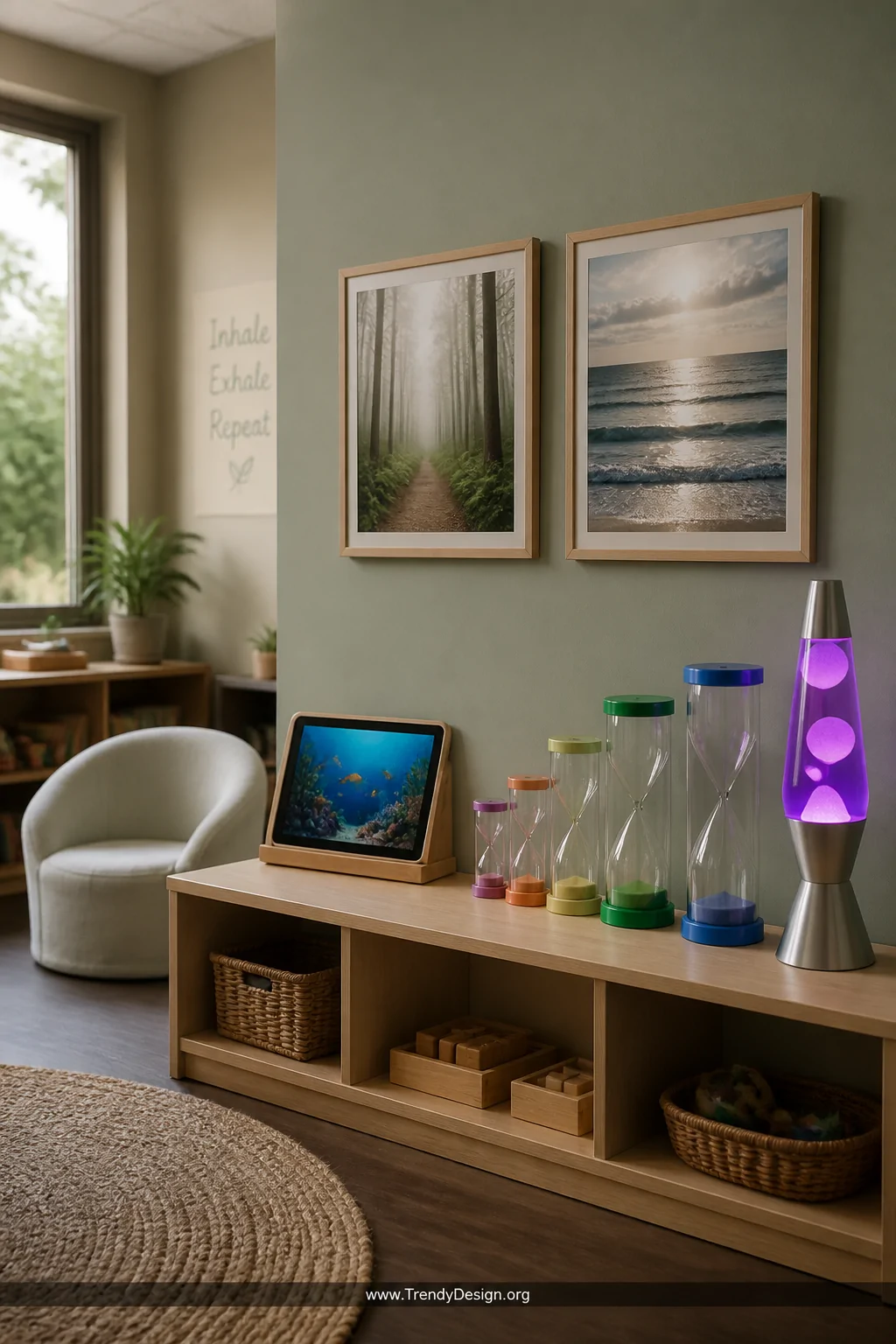
Not all visual stimulation is bad the right kind is genuinely calming. Think slow-moving visual elements like a lava lamp, a sand timer collection, or a simple aquarium screensaver running on an old tablet propped in the corner.
Pair these with a color palette of soft blues, greens, and warm neutrals on the surrounding wall. IMO, this is the easiest upgrade any classroom can make because it requires almost zero budget and immediately shifts the room’s entire energy.
- A basic lava lamp costs under twenty dollars and lasts for years
- Hang a simple wind chime near a window for dual visual and auditory calm
- Display nature photographs forests, oceans, mountains at eye level
5. Headphone Haven: Because Noise Is Sometimes Too Much
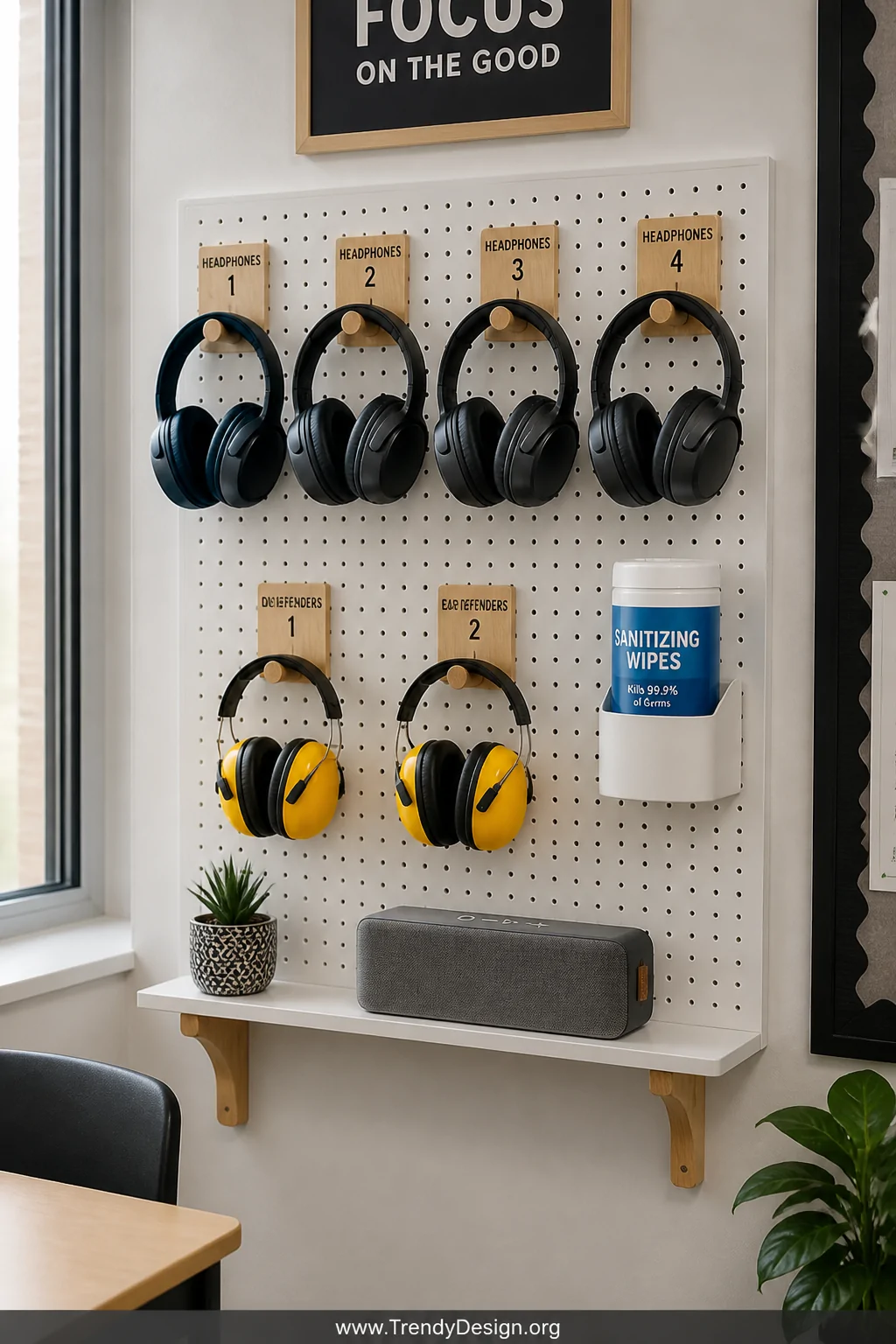
Open classrooms are loud. Like, surprisingly, aggressively loud. A noise-reducing headphone station within your sensory corner gives auditory-sensitive students immediate relief without any drama or special requests.
Stock the station with a few pairs of quality noise-canceling headphones or even basic foam ear defenders hung neatly on labeled hooks. Add a small Bluetooth speaker nearby that plays gentle nature sounds or lo-fi music on a low volume. Students learn to self-regulate when the tools are right there and accessible.
Setting Up Your Headphone Station
- Use a small pegboard to keep headphones organized and grab-ready
- Sanitizing wipes stored right beside the hooks non-negotiable
- Create a simple sign-out system so everyone gets fair access
6. Movement and Fidget Zone: Wiggle It Out
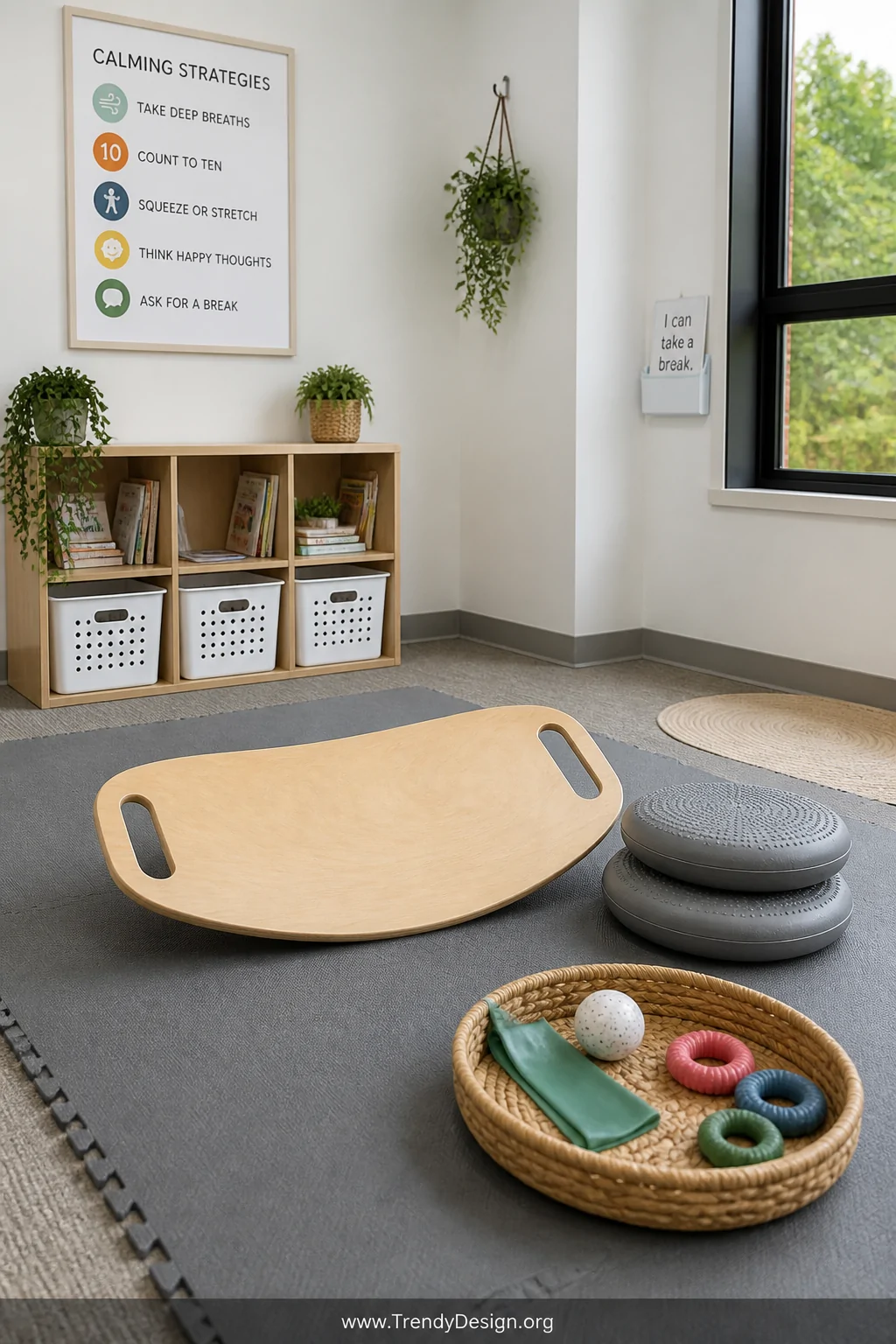
Some kids process the world through their bodies, and sitting absolutely still is genuinely impossible for them not a choice, not defiance, just neurology. A dedicated movement-friendly corner within your sensory space acknowledges that truth without judgment.
Include a small balance board, a wobble cushion or two, and a curated basket of fidget tools like stress balls, stretchy bands, and textured rings. This isn’t a distraction corner it’s a focus-enhancement station, and the research fully backs that up.
- Wobble cushions work even at traditional desks if space is tight
- Resist the urge to fill the basket with too many options five to seven tools is plenty
- Replace worn or broken items immediately so the station stays functional
7. Breathing and Mindfulness Corner: Tiny Yogis Welcome
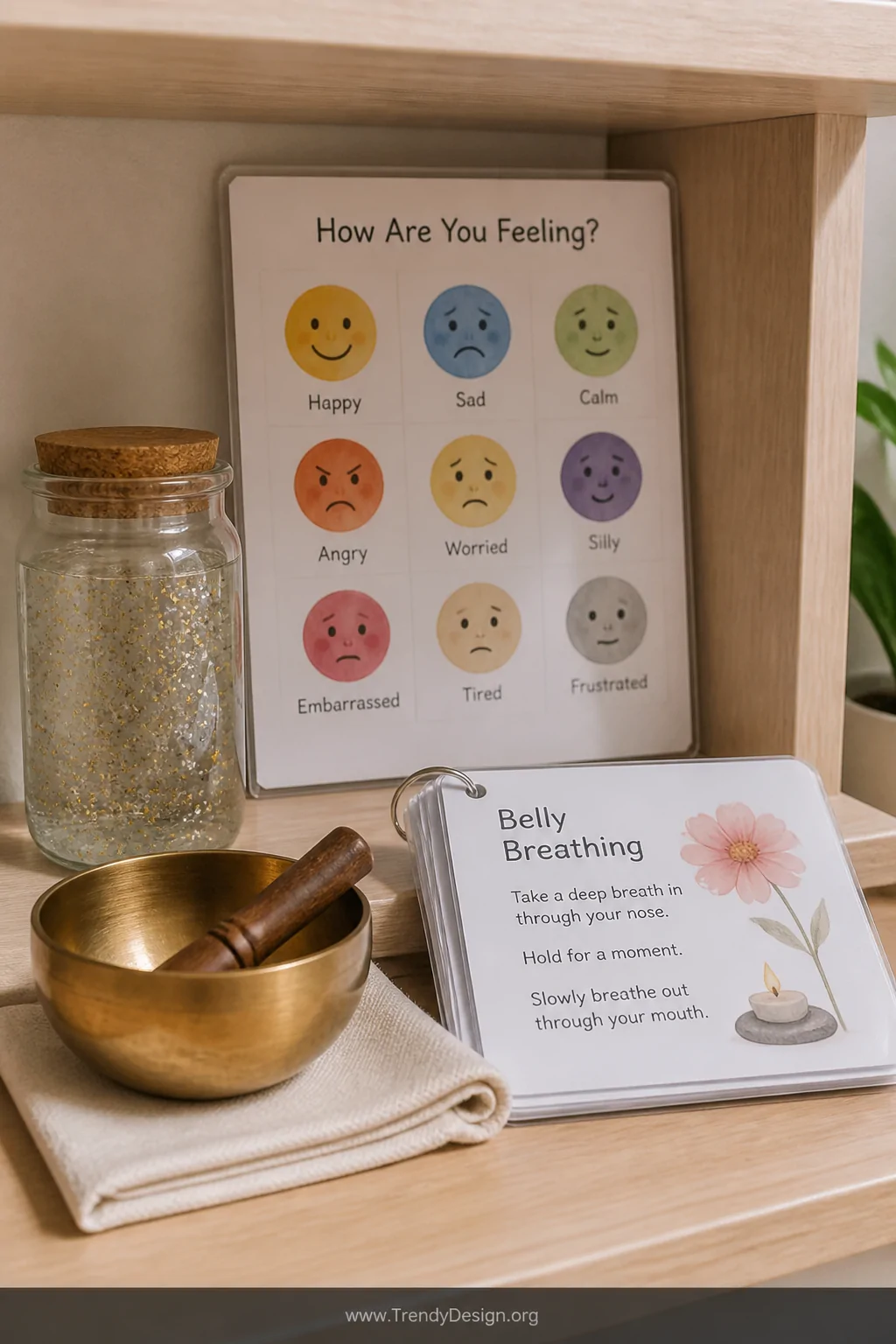
Breathwork sounds fancy, but it’s really just teaching kids to pause before they spiral. A mindfulness corner anchors your entire sensory space with emotional regulation tools that kids can actually use independently after a bit of practice.
Display simple breathing exercise cards with visual guides think “breathe in for the flower, out for the candle” graphics. Add a small Tibetan singing bowl or a calm-down glitter jar kids can shake and watch settle. These sensory corner ideas for classrooms work best when the mindfulness station feels special, not clinical.
- Laminate breathing cards so they survive the school year
- A glitter jar takes five minutes to make and costs almost nothing
- Keep a small feelings chart nearby to help kids name what they’re experiencing
Building thoughtful sensory corner ideas for classrooms doesn’t require a renovation budget or an interior design degree. Start with one element, watch how your students respond, and build from there. The corner that calms one overwhelmed kid on a hard Tuesday? That’s the corner that changes everything. You’ve totally got this.
Leave a Reply