Your pool floats are living their best life tangled in a corner, half-deflated, slowly turning into a rubber graveyard. Sound familiar? Before you grab the first storage rack you spot online, let’s talk about what actually makes a pool float storage solution worth your money and your backyard space.
1. How Much Space Do You Actually Have?
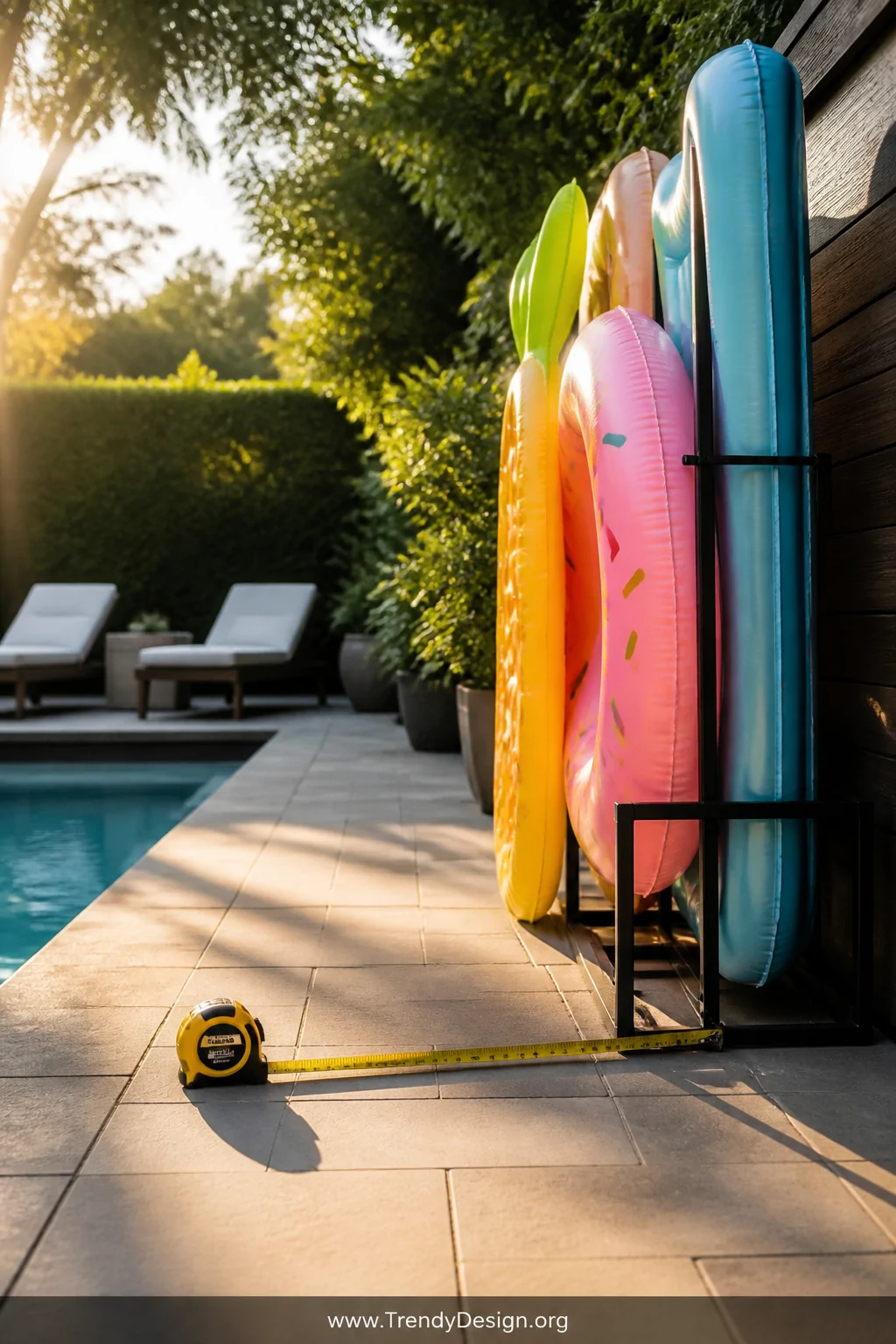
Before anything else, measure your space. Seriously, grab a tape measure right now because nothing is sadder than ordering a gorgeous pool float organizer and realizing it blocks your gate or eats up your entire patio.
Think about where the storage will live. Is it going poolside, in a shed, on a deck, or against a fence? Each location has its own size constraints and traffic flow considerations.
- Measure width, height, and depth of your intended spot
- Account for walkways and clearance around the unit
- Consider whether you need a freestanding or wall-mounted option
Compact vertical racks work wonders for smaller spaces, while sprawling outdoor bins suit larger yards beautifully. Know your square footage before you swipe that card.
2. How Many Floats Are You Actually Storing?
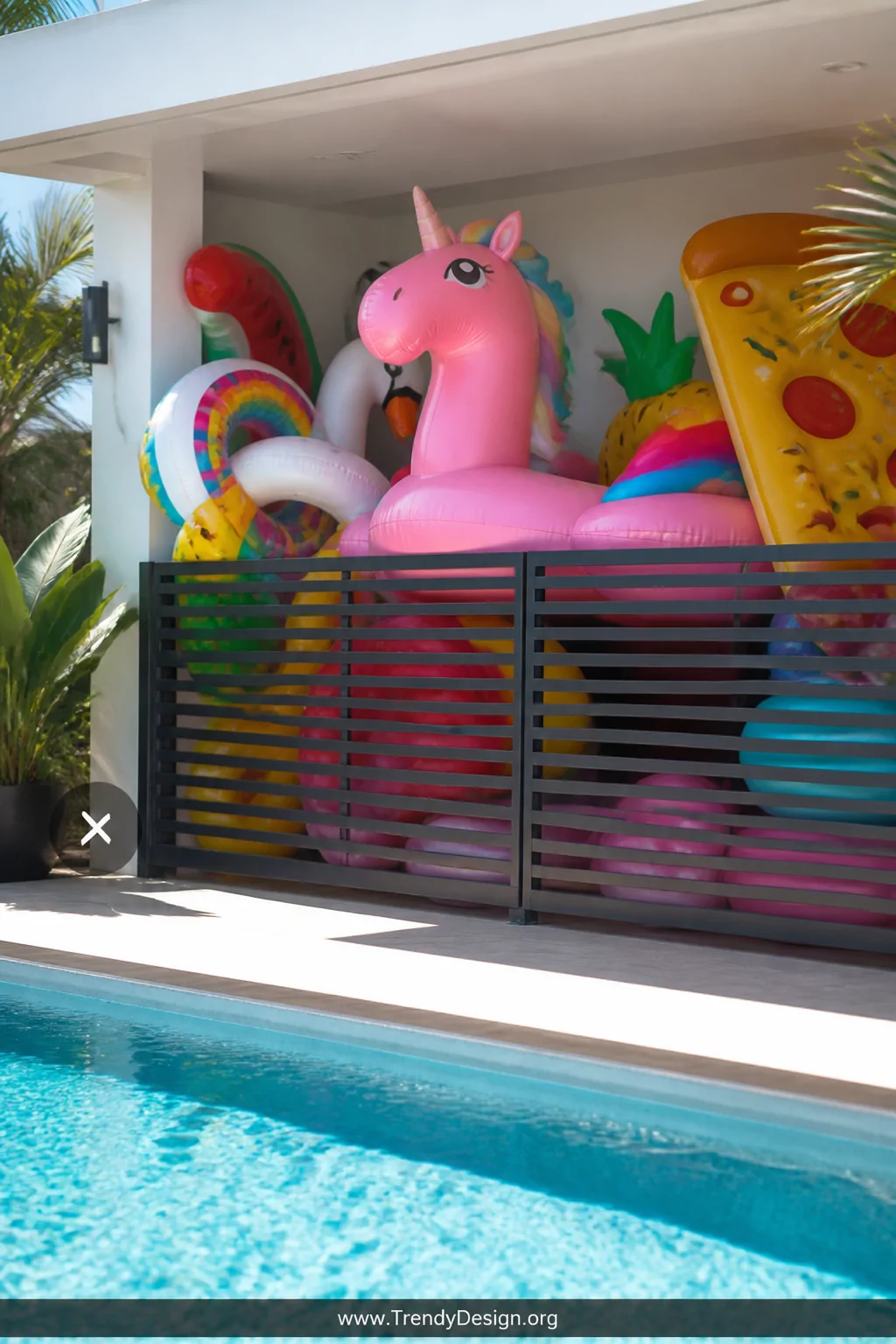
Are you storing two modest pool noodles or an entire inflatable zoo? The number and size of your floats completely changes what kind of storage makes sense for your setup.
Giant unicorn floats and six-foot pizza slices need serious real estate. A small wall hook simply won’t cut it when you’re dealing with oversized inflatables that could honestly double as parade floats.
- Count all your floats, including kids’ toys and noodles
- Note the size of your largest inflatable
- Factor in future purchases you know you’re buying more
Choosing a pool float storage solution that fits your current collection AND leaves room to grow is genuinely the smartest move you can make here.
3. What Materials Can Handle Outdoor Conditions?
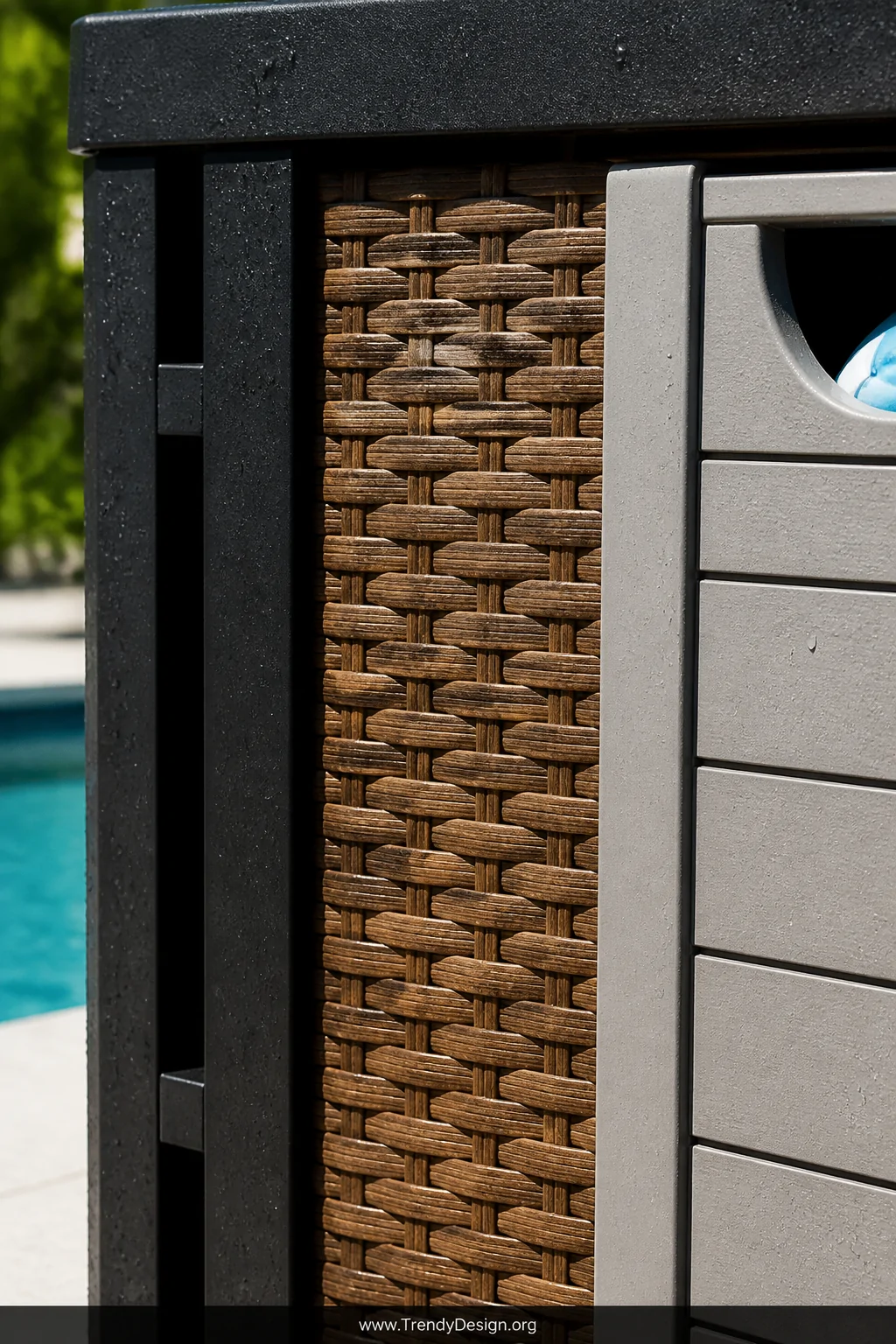
Outdoor storage lives a rough life. Sun, rain, humidity, chlorine splash your storage solution needs to survive all of it without rusting, rotting, or warping into something unrecognizable after one summer.
Look for materials built specifically for outdoor use. This is not the place to repurpose an old bookshelf and hope for the best.
- Powder-coated steel durable, rust-resistant, and sturdy
- HDPE plastic weather-resistant and easy to clean
- Resin wicker stylish but check the frame quality carefully
- Treated wood beautiful but requires regular maintenance
UV resistance matters too. Direct sunlight degrades cheaper plastics fast, leaving you with a cracked, faded mess within a single season. Always check the material specs before buying.
4. Will It Keep Your Floats Dry and Ventilated?
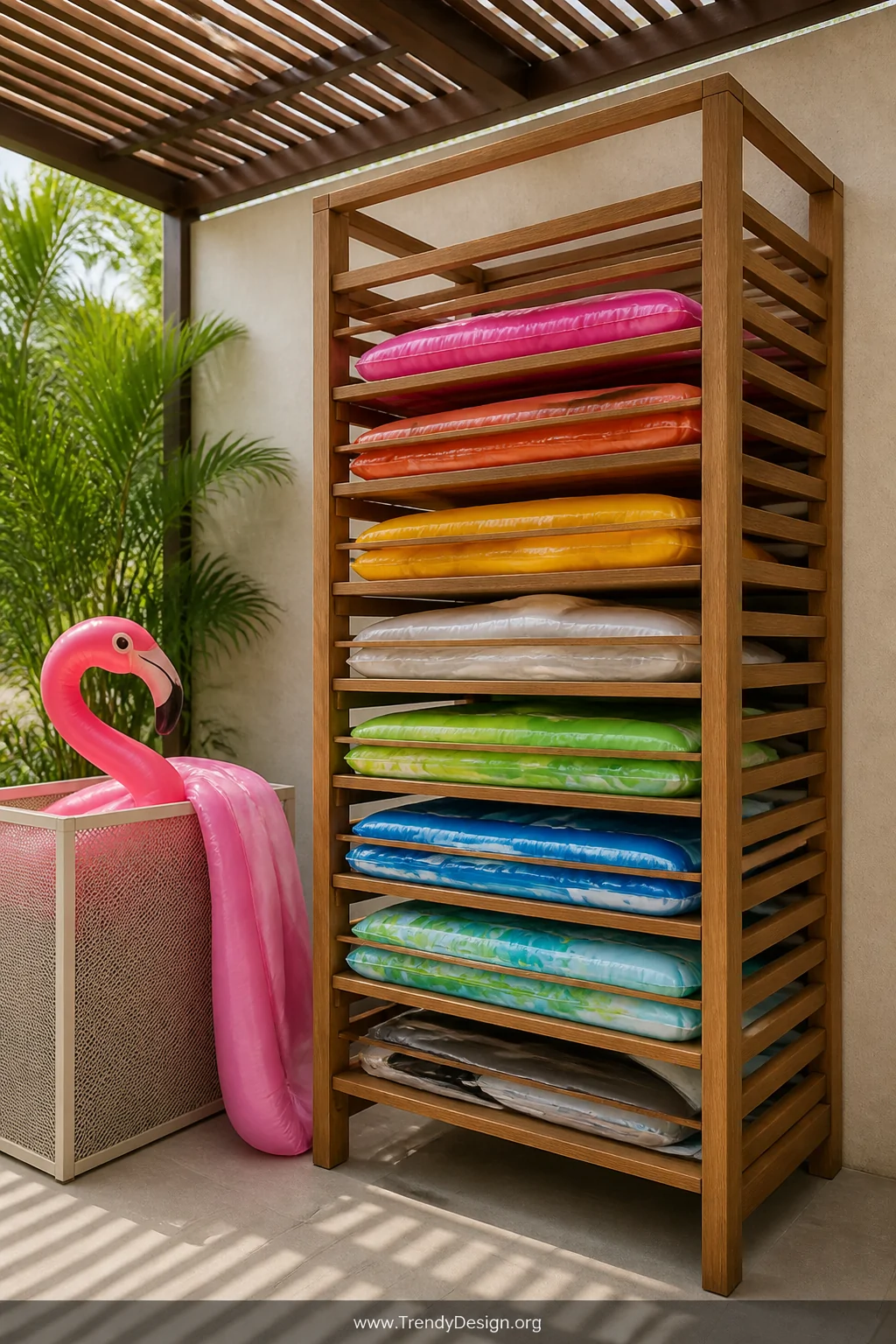
Here’s a problem nobody talks about enough wet floats stored in enclosed bins turn into mildew factories. If your storage solution traps moisture, you’ll pull out your favorite flamingo float in June smelling like a locker room.
Good pool float storage allows airflow so things can dry out naturally between uses. Open racks, mesh bins, and slatted containers are your best friends here.
If you prefer a closed bin for aesthetic reasons, look for one with drainage holes or a vented lid. Your nose will thank you later, and honestly, so will your floats mildew breaks down materials faster than you’d think.
5. How Easy Is It to Access and Use Daily?
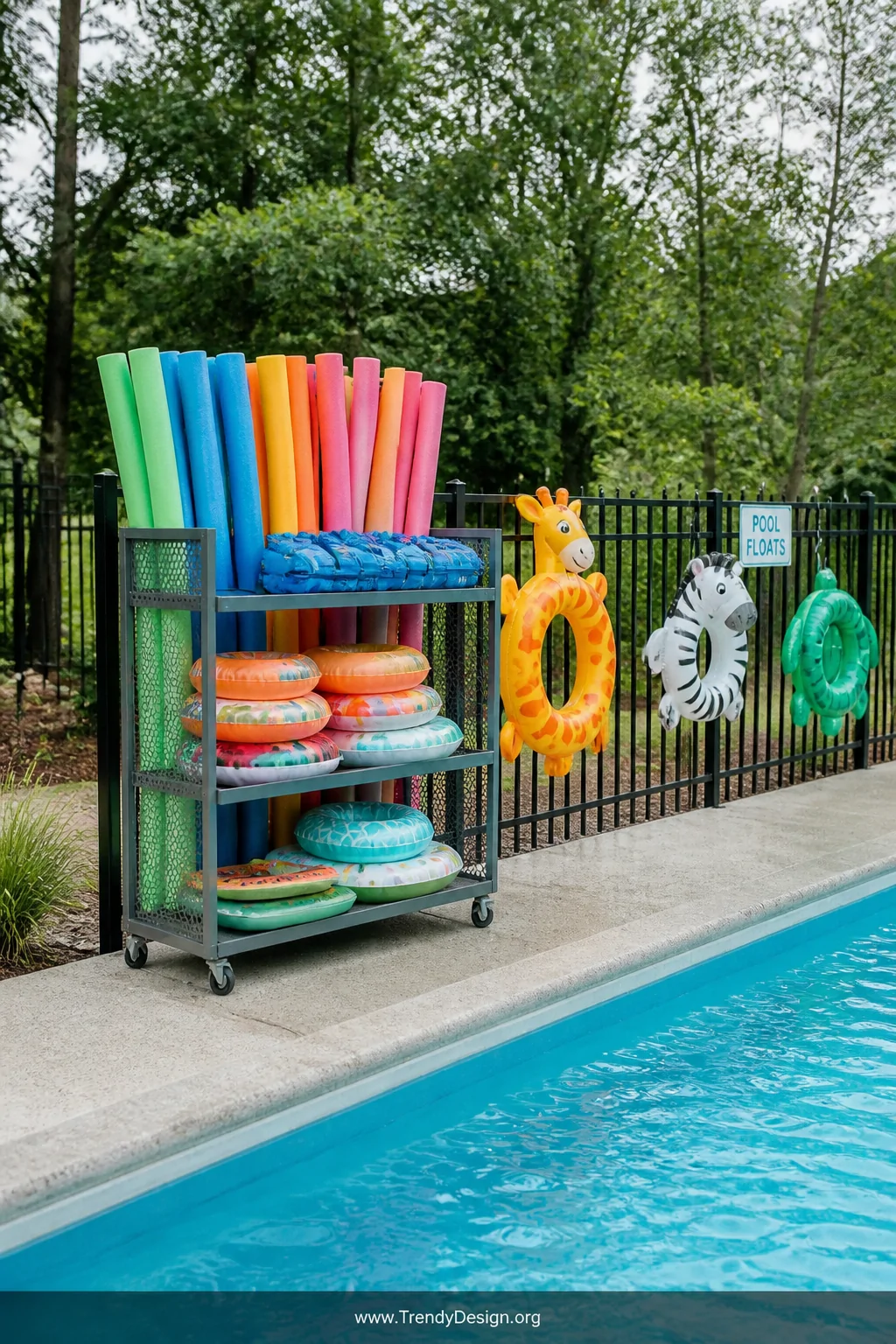
A storage solution that’s annoying to use is a storage solution you’ll stop using. If grabbing a float requires removing six other items, dismantling a bungee cord system, or performing some kind of yoga pose it’s already failing you.
Think about who’s using this storage daily. Kids especially need accessible, grab-and-go options or those floats will end up exactly where they started scattered everywhere.
- Open racks and hooks offer instant access
- Wheeled carts let you move storage closer to the pool
- Lidded bins work well for less-used items
The best pool float organizer is one your whole family will actually use consistently without complaints or workarounds. Convenience is everything.
6. Does It Match Your Outdoor Aesthetic?
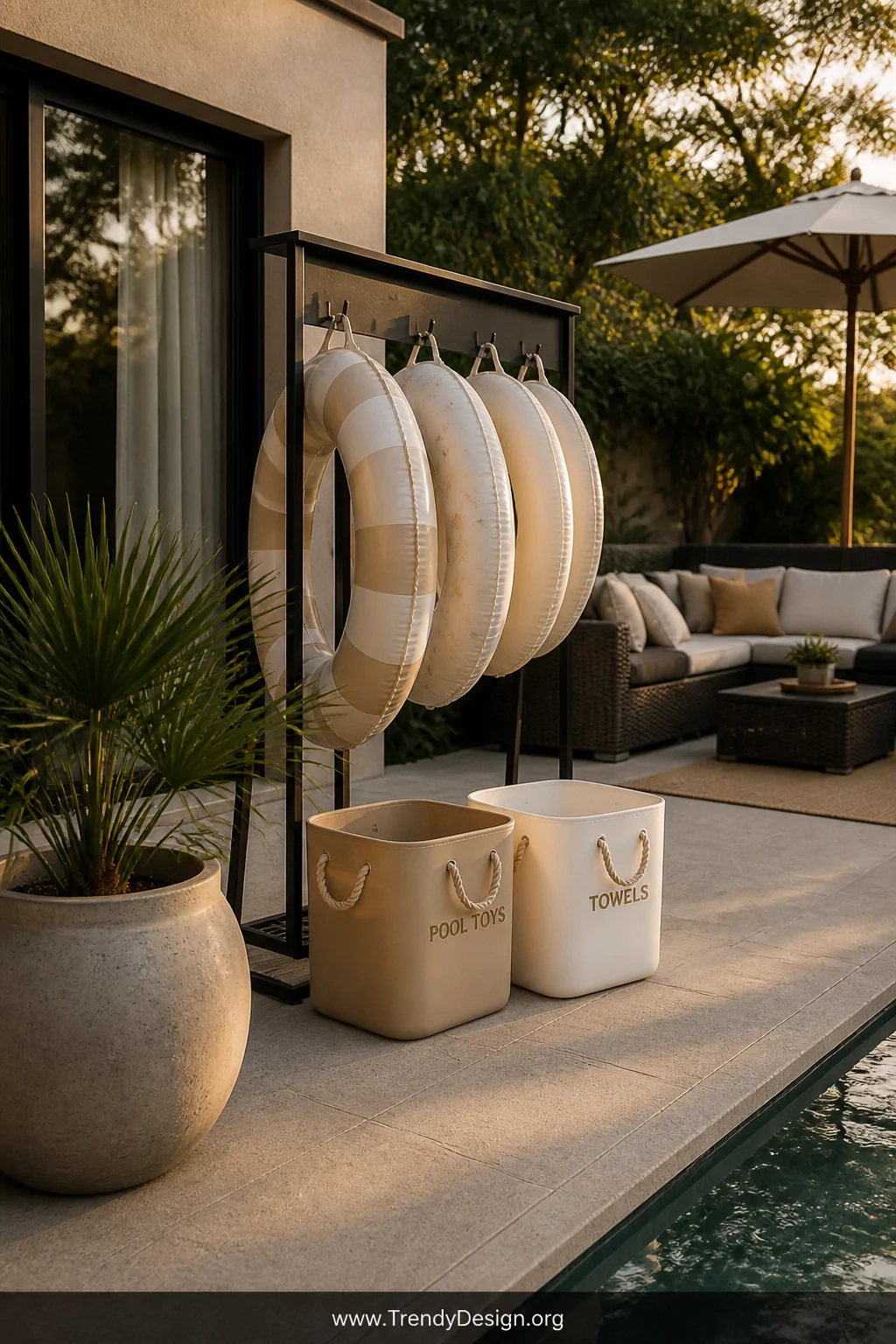
FYI your storage doesn’t have to be an eyesore. Plenty of beautiful options exist that complement your outdoor space instead of clashing with it. Your backyard deserves better than a rusty wire rack screaming for attention in the corner.
Consider your existing outdoor furniture style. Modern patios suit sleek metal racks or minimalist resin bins. Bohemian or tropical setups love natural textures like wicker or wood finishes.
Color matters too. Neutral tones blend seamlessly, while bold colors can become a fun intentional design choice. Either way, your pool float storage solution should feel like it belongs in your space, not like an afterthought shoved poolside out of desperation.
7. What’s Your Realistic Budget?
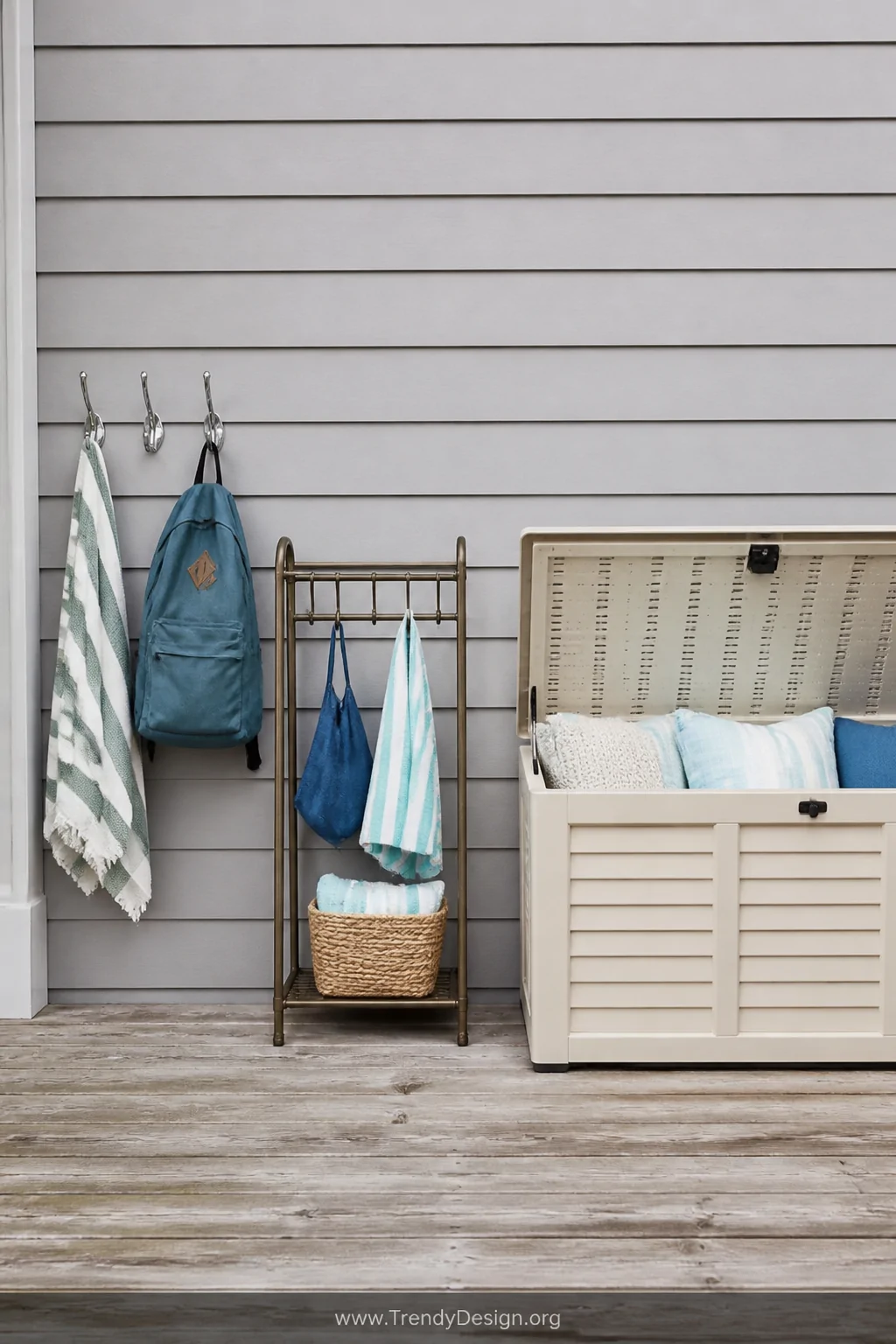
Let’s talk money honestly, because pool float storage ranges from fifteen dollars to several hundred. And IMO, the most expensive option isn’t always the best one for your specific situation.
A simple wall-mounted hook system can cost almost nothing and work brilliantly for a small collection. A premium weatherproof deck box with ventilation is worth every penny if you have a large family and a serious float collection.
- Budget-friendly wall hooks, tension rods, DIY PVC racks
- Mid-range freestanding metal racks, resin storage bins
- Premium custom storage sheds, high-end deck boxes, built-in solutions
Set your budget first, then shop within it. There are genuinely great options at every price point you just need to know where to look and what features matter most to you.
Your Perfect Pool Float Storage Setup Is Out There
Finding the right pool float storage solution doesn’t have to feel overwhelming. Measure your space, count your floats, prioritize ventilation, and pick something that fits your lifestyle and your budget. Once everything has a proper home, your backyard transforms from chaotic to effortlessly organized and summer gets about ten times more enjoyable. Now go find that perfect rack and rescue your floats from the corner!
Leave a Reply